


HZ Info, CNPC’s Blue Ocean New Materials (Tongzhou Bay) high-end polyolefin new materials project is expected to be ready for start-up in November. This follows the Daqing Petrochemical POE industrial demonstration unit having achieved full-process operation, marking a shift in CNPC’s self-developed high-end polyolefin technology portfolio from “demonstration validation” toward “large-scale commercial deployment.”
The project’s new units include a 100,000 tonnes/year 1-hexene/1-octene unit, a 100,000 tonnes/year POE (polyolefin elastomer) unit, a 200,000 tonnes/year full-density polyethylene (FDPE) unit, and 2 × 25,000 tonnes/year ethylene-propylene rubber (EPR) units. The project builds an integrated industrial chain around “alpha-olefin monomer—elastomer—polyolefin”: 1-hexene/1-octene will be self-supplied as key comonomers for POE and high-value-added polyethylene; POE, FDPE, and EPR will form a product matrix covering end markets such as photovoltaics, automobiles, and wire and cable.
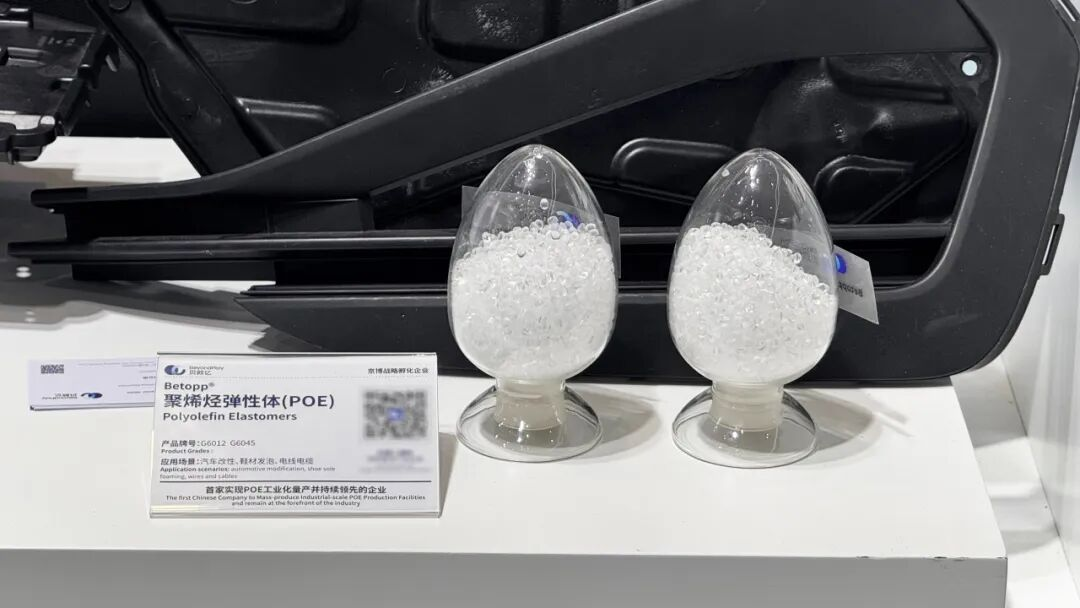
Polyolefin elastomer (POE) is produced by copolymerizing ethylene with alpha-olefins such as 1-butene, 1-hexene, and 1-octene, mostly using metallocene catalysis. Its molecular structure combines polyethylene crystalline segments and amorphous copolymer segments: the former provide strength and processability, while the latter provide elasticity and flexibility. As a result, POE has rubber-like high elasticity and excellent transparency at room temperature, and can also flow plastically and be easily processed like a plastic at high temperatures. The industry calls it “a rubber that can be molded and a plastic that can rebound.”
PV encapsulant film is the largest application market for POE. POE combines thermoplasticity and high elasticity, with outstanding aging resistance, UV resistance, and electrical insulation, and is mainly used for encapsulating advanced photovoltaic cells. Automotive modification is becoming the main incremental market. As a toughening material, POE is widely used in bumpers, interior parts, and elastic components, supporting vehicle lightweighting and improved safety; as new energy vehicles continue to raise material performance requirements, demand elasticity for automotive POE is opening up. In addition, POE is also used in foamed footwear materials, wire and cable, medical consumables, and other fields.
In 2026, China’s POE market is shifting from “scarcity and high prices” to “competition-driven volume expansion.” As of August 2026, China’s cumulative POE capacity had reached 860,000 tonnes/year, up 27% from the end of 2025; planned, under-construction, and proposed capacity has exceeded 6 million tonnes/year. Central state-owned enterprises, private-sector leaders, and coal-based newcomers are advancing on three tracks, with participants including CNPC, Sinopec, Wanhua Chemical, Eastern Shenghong, Dingjide, Levima Advanced Materials, Beyondpoly, Ningxia Baofeng, Shaanxi Yuneng, and Dongming Petrochemical.