


Nov. 17 (Third-Party Observation) — As AI computing density continues to rise and air cooling approaches its limits, liquid-cooling media have become a new focal point across the supply chain. Guangzhou Jointas Chemical Co., Ltd. (SZ: 002909) recently released a silicone-based immersion coolant, which it says uses high-purity organosilicon as a base material and targets AI intelligent computing centers, standalone computing nodes and desktop computing cabinets. From a third-party perspective, Huizheng Information notes that whether the product can balance safety, energy efficiency and long-term stability still requires validation at scale.
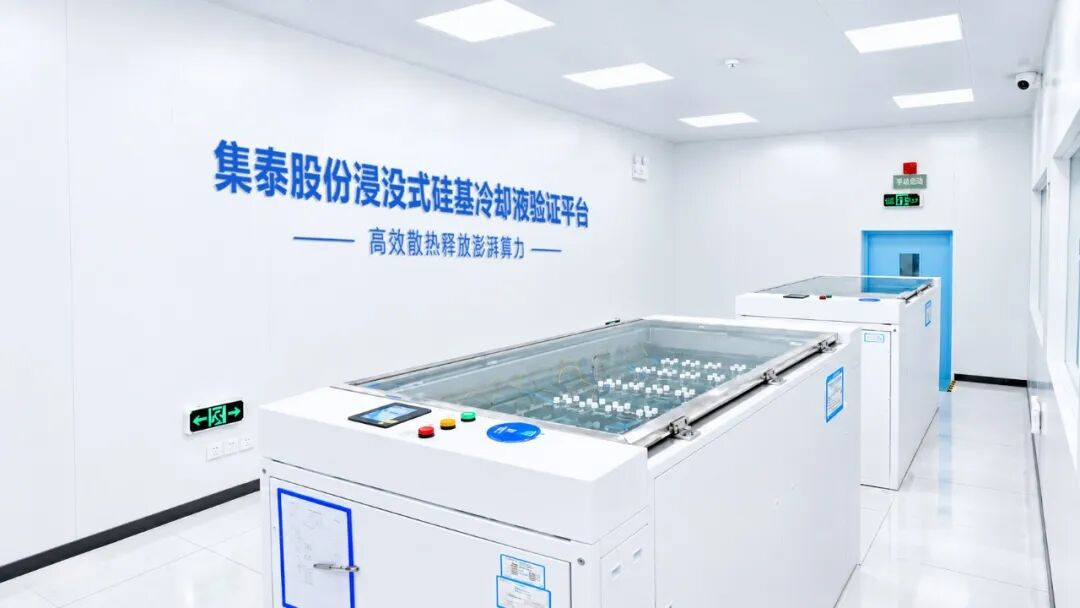
According to company disclosures, the coolant is PFAS-free, non-toxic, odorless and non-corrosive, and emphasizes electrical insulation to reduce short-circuit risks during full-server immersion. Jointas has built an in-house immersion silicone coolant validation platform to conduct full-machine immersion tests covering heat-transfer efficiency, insulation reliability, material compatibility and long-term stability. Third-party media note that as the core medium of an immersion system, a coolant’s material compatibility and long-term chemical stability directly affect maintenance costs and safety boundaries; the openness of test data and the possibility of independent reproduction deserve attention.
On energy efficiency, the company claims that conventional air cooling requires an additional 0.3–0.5 kWh of electricity for heat dissipation per kWh of computing power, whereas its silicone coolant consumes about 0.1 kWh for heat dissipation, keeping system PUE below 1.1, in line with China’s tier-1 data center energy-efficiency standard. Full-machine immersion eliminates server fans and can reduce supporting air-conditioning and noise. For maintenance, the product contains a tracer that allows leak points to be located without shutdown or opening the enclosure. If these metrics are consistently achieved in actual projects, they could help reduce energy consumption in high-density computing facilities, though performance may vary across climates, workloads and system designs.
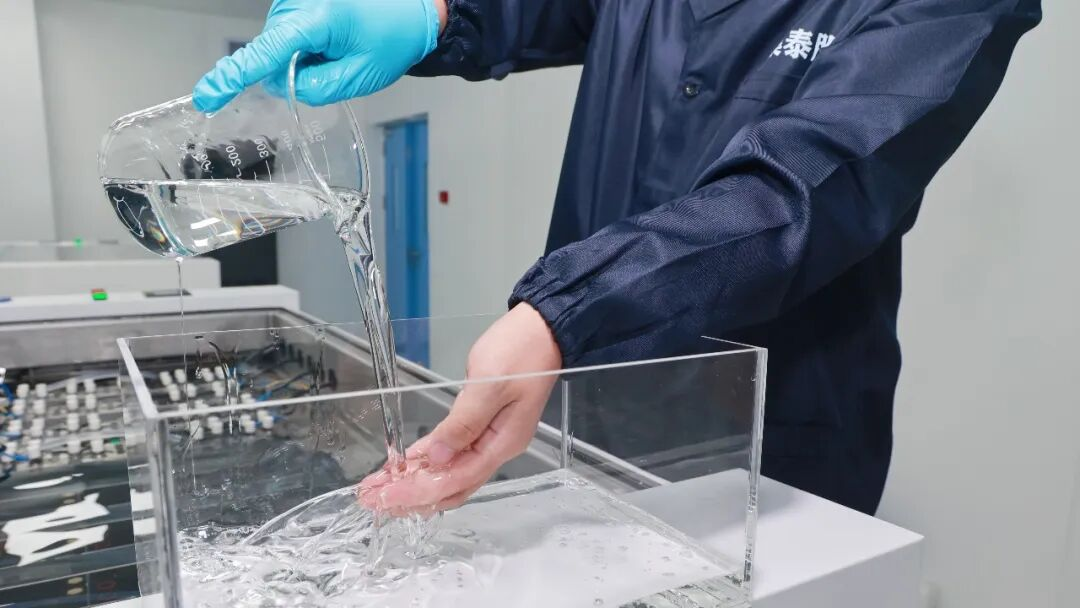
On key parameters, the company reports kinematic viscosity of 18–19 cSt at 40°C, thermal conductivity of 0.14 W/m·K, a flash point above 220°C and a pour point below −57°C. It also says it has completed more than 7,200 hours of accelerated immersion testing at 80°C, while full-machine dynamic continuous immersion testing is still underway. Huizheng Information observes that the parameters suggest a balance between flowability and safety, but large-scale adoption of immersion liquid cooling will also depend on cost, fluid replenishment and maintenance, server-maker compatibility and the improvement of industry standards.
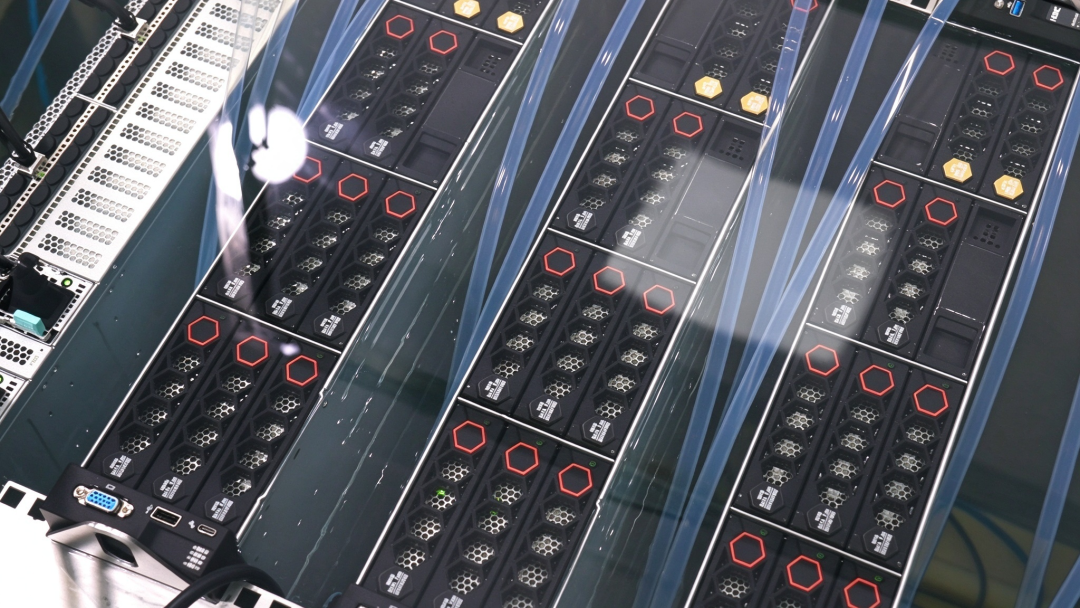
From an industry perspective, immersion liquid cooling has advantages in ultra-high-density scenarios, while cold plate liquid cooling remains the more mature route at present; the two are likely to coexist for a long time. Jointas is entering liquid-cooling media through organosilicon materials, seeking to enhance self-sufficiency in a critical materials segment. From a third-party media perspective, the value of this product will ultimately be tested by energy efficiency, failure rates and total cost of ownership in real projects rather than by a single parameter. Huizheng Information will continue to monitor its deployment progress.